 EN
EN

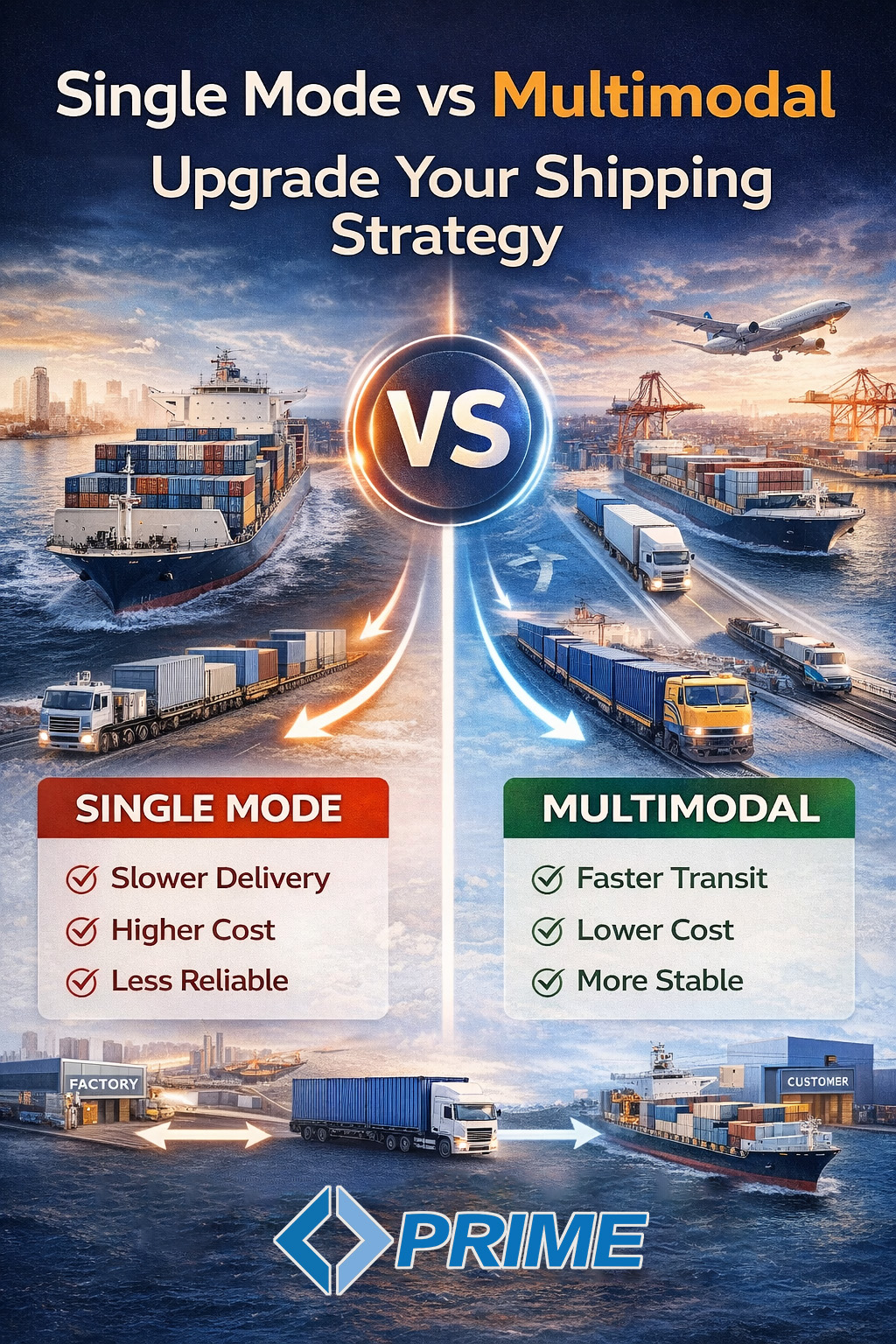
Cost Efficiency: How Multimodal Transport Lowers Landed Costs Across Borders
Ocean + rail + drayage blending cuts total landed costs by up to 18% (World Bank, 2023)
Multimodal transport combines ocean freight’s long-haul economies, rail’s fuel efficiency, and drayage’s last-mile flexibility—leveraging each mode where it performs best. This integration reduces handling, fuel use, and demurrage fees through synchronized transfers. According to the World Bank (2023), strategically blending ocean, rail, and drayage delivers up to 18% lower landed costs versus unimodal alternatives. For example, Asian imports to North America commonly arrive via West Coast ports, shift to double-stack rail for inland movement, then transition to trucks for final delivery—avoiding expensive all-truck routes while preserving schedule integrity.
Multimodal vs. unimodal cost comparison in EU–UK and US–Mexico corridors
Trade corridor analysis reveals consistent cost advantages for multimodal execution:
| Corridor | Unimodal Pain Points | Multimodal Savings Drivers | Cost Advantage |
|---|---|---|---|
| EU–UK | Road tolls, driver shortages, border delays | Short sea shipping + rail avoids road bottlenecks | 15–20% lower costs |
| US–Mexico | Border wait times, insurance premiums | Rail for long hauls + trucks for border/drayage | 12–17% savings |
In EU–UK trade, coastal shipping bypasses Channel crossings and congestion charges, while rail distributes cargo across the UK—eliminating driver fees and reducing reliance on scarce HGV capacity. In US–Mexico trade, rail moves freight efficiently between industrial hubs like Monterrey and Dallas, with trucks reserved only for border transit and final-mile delivery. This targeted mode allocation mitigates fuel surcharges, labor-intensive handling, and insurance premiums—delivering durable economic advantage over single-mode solutions.
Time Savings and Reliability: Accelerating Cross-Border Deliveries with Multimodal Transport
22–35% transit time reduction in ASEAN–China trade via synchronized rail-maritime corridors (UNCTAD, 2024)
Multimodal transport accelerates cross-border shipments by eliminating handover delays through coordinated mode switching and pre-scheduled connections. In ASEAN–China corridors, integrating maritime arrivals with immediate rail departures—bypassing congested port hubs—cuts transit time by 22–35%, per UNCTAD (2024). This performance stems from system-level synchronization, not just sequential movement.
Flexibility is built into the model: when weather, port congestion, or regulatory delays disrupt one leg, logistics teams reroute seamlessly—e.g., shifting inland segments from delayed maritime to rail—preserving delivery commitments. Real-time visibility across modes enables proactive intervention, while integrated scheduling reduces reliance on safety stock. As a result:
| Factor | Unimodal Transport | Multimodal Transport |
|---|---|---|
| Average Border Transit Time | 5–7 days | 3–4 days |
| Schedule Reliability | 68% | 89% |
| Congestion Response Options | Limited | Multiple alternatives |
This reliability directly supports lean inventory practices and is essential for time-sensitive sectors—from electronics requiring precise component sequencing to perishables needing temperature- and time-controlled handovers.
Simplified Compliance: Single-Contract Multimodal Transport and Customs Integration
40% faster border crossing using digital single consignment notes (EU TIR e-CMR pilot)
Multimodal transport enhances customs efficiency through unified digital documentation—exemplified by the EU’s TIR Electronic Consignment Note (e-CMR) pilot. By consolidating manifests, safety certificates, and tariff classifications into a single, authority-accessible electronic record, the system eliminates redundant paperwork and manual data re-entry. Pilots demonstrated a 40% reduction in border processing time, with automated risk profiling expediting clearance for low-risk shipments. The impact is especially pronounced for perishables and just-in-time manufacturing, where dwell time at land borders directly affects product viability and production continuity.
Centralized documentation reduces non-tariff barrier exposure
A single multimodal transport contract—managed by a certified Multimodal Transport Operator (MTO)—replaces fragmented carrier liabilities with one master Bill of Lading covering all legs. European Logistics Association audits confirm this consolidation reduces administrative errors by 63%. Harmonized, authoritative cargo data replaces conflicting declarations from multiple carriers—lowering exposure to common non-tariff barriers such as:
- Incorrect HS code classifications
- Missing certificate of origin verifications
- Inconsistent commercial invoice valuations
Centralized compliance also streamlines Rules of Origin validation under free trade agreements. One operator coordinates security endorsements, sanitary permits, and customs certifications—preventing shipment rejection due to documentation gaps during modal handovers.
Resilience and Flexibility: Multimodal Transport as a Strategic Risk Mitigation Tool
Global supply chains face persistent disruptions—from port congestion and extreme weather to labor strikes and geopolitical shifts. Relying on a single transport mode creates systemic vulnerability. Multimodal transport counters this by embedding strategic redundancy: sea, rail, road, and air serve as complementary—not merely alternative—options. When maritime delays arise, rail corridors absorb volume without compromising delivery momentum; when border closures occur, short-sea or air-leg substitutions maintain flow.
This agility transforms logistics from a cost center into a competitive shield. Companies reduce revenue loss from delays by up to 40% in volatile lanes—gaining confidence to enter emerging markets despite infrastructure limitations. Every mode switch reflects intentional risk mitigation, not reactive compromise—turning operational flexibility into measurable strategic advantage.
FAQ
What is multimodal transport?
Multimodal transport refers to the integration of different transportation modes (e.g., ocean, rail, drayage) to exploit the strengths of each for more efficient, cost-effective, and reliable logistics.
How does multimodal transport reduce costs?
It reduces costs by optimizing transportation routes and capacities, minimizing handling and fuel usage, and avoiding bottlenecks associated with single-mode transport. Studies show up to 18% reduction in landed costs.
Why is multimodal transport more reliable than unimodal solutions?
Multimodal transport provides various route options and mode switching abilities, enhancing schedule reliability and reducing transit times by effectively responding to disruptions.
How does multimodal transport simplify compliance?
By using digital single consignment notes like the EU e-CMR, it simplifies documentation and customs processes, reducing border crossing times and administrative errors.
Can multimodal transport handle perishable goods?
Yes, it is especially beneficial for time-sensitive and perishable goods, as it ensures timely and controlled delivery through coordinated scheduling and mode switching.
Table of Contents
- Cost Efficiency: How Multimodal Transport Lowers Landed Costs Across Borders
- Time Savings and Reliability: Accelerating Cross-Border Deliveries with Multimodal Transport
- Simplified Compliance: Single-Contract Multimodal Transport and Customs Integration
- Resilience and Flexibility: Multimodal Transport as a Strategic Risk Mitigation Tool