 EN
EN

China’s Shipping System: Creating Reliable Operations for Container Shipping
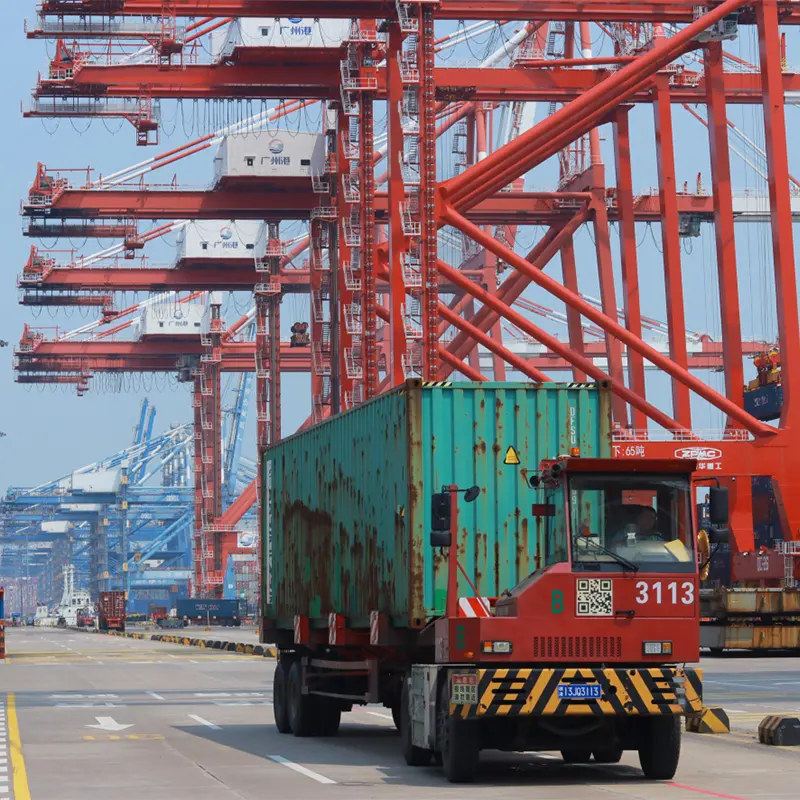
Leadership in Global Port Capacities: Global Container Shipping Networks with China's Shanghai, Ningbo, and Shenzhen Ports
China's three largest ports, Shanghai, Ningbo-Zhoushan, and Shenzhen, are crucial for international shipping and the trade of goods. Shanghai has the largest port and has had the title for the busiest ports and container facilities for the last 10 years, taking in around 47 million TEUs. The port of Ningbo is next, having deep water docking facilities large enough for the ultra-large container vessels (ULCVs), and Shenzhen is the largest container shipping port in Southern China and the first port of call for the Southern Electronics and Manufacturing Industries. These port cities even provide direct shipping across all major trade lanes, which provide competitive advantages for container shippers with reduced transit and cargo risk, and decreases costs for inventory and demurrage. For shipping lines with competitive port access, this means efficient port servicing operations, maximizing a shipping line's vessels, and increases operational schedule. This is extremely important to be a partner of choice for B2B shippers.
Easier national level connectivity: Integrating rail, bonded warehousing and customs clearance hubs for pre-emptive clearance, creates a value proposition for end-to-end container line solutions.
Rail, bonded warehousing and customs clearance pre-clearance create a value proposition for end-to-end container line solutions for China’s extended inland infrastructure with respect to coastal terminals.
The China Railway Express (CRE) has linked 25 cities in Europe to over 60 cities in China. Key corridors such as Chongqing-Duisburg move cargo in 12 -14 days, which is faster than traditional ocean-rail combined methods.
China’s inland facilities integrated with bonded warehousing and customs pre-clearance hub, allow goods to be stored and customs clearance is completed, prior to the goods arriving at the port. It represents an improvement to the port’s storage, readying it for export.
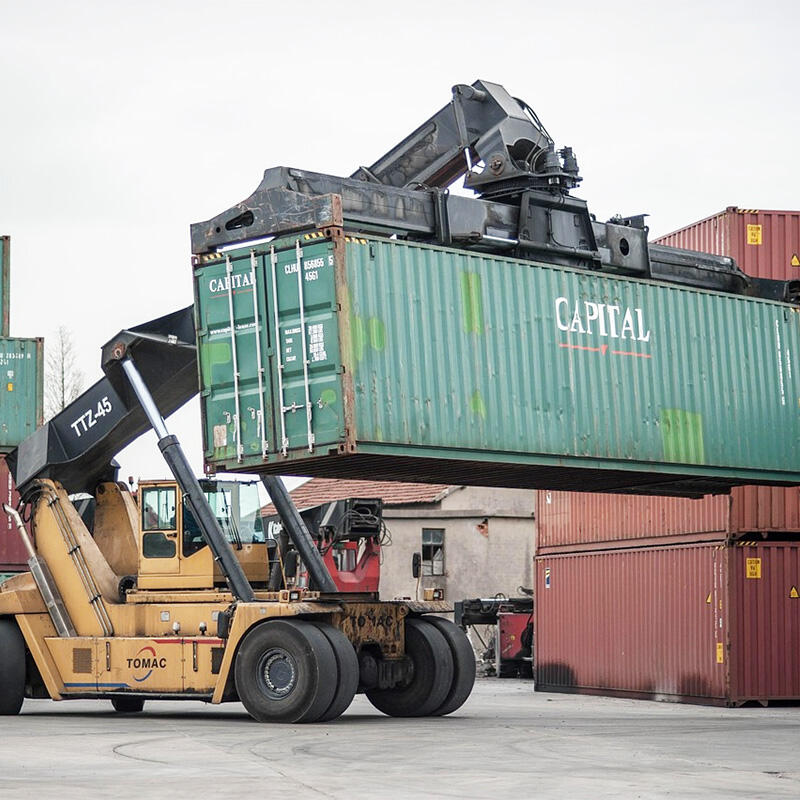
China is using smart port technologies, in addition to customs and bonded hubs. Port technologies include IoT enabled yard management and automated gate systems and create true door to door container line solutions.
The outcome is less time waiting, certain and faster transport from the factory floor to the destination, and a measurable decrease in demurrage and detention.
Performance Differentiation of Prime Container Line Across Key Trade Lanes
Direct sailings, schedule consistency, and predictable transit times in the Transpacific, Europe, and ASEAN lanes
In the high-demand Transpacific, European, and ASEAN lanes, Prime Container Line runs a fleet of dedicated vessels, removing the need for third-party transshipment and guaranteeing year-round capacity. Prime Container Line's schedule consistency—where vessels arrive within 24 hours of the expected time—far exceeds the 60%–70% industry averages, translating to more predictability in inventory and working capital. For example, Prime’s route from Shanghai to Los Angeles goes direct and has a range of 12–14 days, compared to other routes, which can take indirect trips and can take 20 days or longer. This enables fewer holds of safety stock for imports, spot-rate volatility can be reduced in peak seasons, and budgeting for services can be more controlled.
Digital container line operations include real-time vessel tracking, electronic bills of lading integration, and API-driven customs and EDI integration.
Digital transparency has become standard for effective container line performance, and Prime integrates it across the operational stack. Our customers leverage real-time vessel tracking to manage exceptions well in advance. Electronic bills of lading (eBLs), which the International Group of P&I Clubs has endorsed and major shipping alliances have adopted, along with the commercial shipping alliances, replace paper-based processes. This cuts ticket/documentation cycles from days to hours and decreases the risk of fraud. API-driven integrations to national customs systems (China’s Single Window, the EU’s Import Control System, etc.) and EDI networks seamlessly exchange data, significantly reducing the margin of human error associated with customs clearance. For high-volume B2B partners, this results in a streamlined, fully-integrated, and auditable data flow that achieves optimal operational control, minimization of risk related to compliance, demurrage, and maximization of handoff efficiency at transshipment points.
Visible Benefits of Choosing a Specialized Container Line Such as Prime
Utilizing a specialized container line delivers benefits that are measurable and repeatable. Generalist carriers cannot offer the same advantages. Prime’s specialized network provides better schedule integrity, service disruptions, and buffer stock, improving working capital efficiency. Along with avoiding detention and demurrage, Prime provides better cargo handling, reefer and controlled atmosphere units, and provides documentation and cargo units at the point of origin. Additionally, Prime offers real time shipment visibility to assist shippers in avoiding delays. The Prime in-house bilingual compliance team offers real, unique advantages by working in the regulatory space in China to offer timely and correct harmonized system codes, expedite customs, and eliminate detention and demurrage. Keeping detention and demurrage down and offering faster order fulfillment offers a real, sustainable, and repeatable advantage for importers.
How Prime Container Line Meets and Exceeds Basic B2B Selection Criteria
B2B importers select a logistics partner based on four criteria: on-time delivery, compliance, operational transparency, and risk at both the shipment and regulatory level. Through specialized networks and expertise, Prime Container Line has exceeded all entrant expectations.
China-origin expertise: In-house bilingual customs compliance and dedicated container line operations team
Shipping from China requires a robust understanding of evolving customs regulations, regional enforcement of laws, and the subtleties of various documentation. To cover this gap, Prime employs a team of fully bilingual compliance specialists, all of whom are certified members of China’s Customs Broker Qualification Framework. This team handles classification, valuation, origin determination, and pre-arrival filings. Most commonly, these tasks would be handled by a third-party broker. This means there is no intermediary to miscommunicate, broker a handoff, or create documentation errors. Prime also employs a specialized team for each container line. This team handles all shipments from the time the goods leave the factory to the time the goods are delivered at the terminal. This team of operations specialists means delays are avoided and proactive issues are managed before they become problems. Supply chain predictability means there is official control, rather than a contractual promise, resulting in fewer customs delays and a reduced risk of demurrage.
FAQ
Why are China’s ports, in particular Shanghai and Ningbo-Zhoushan, so ideally suited for global shipping? China’s ports have world-class capacity, direct sailings for almost all major trade routes, and all the state-of-the-art shipping equipment for global shipping.
How does engaging China Railway Express (CRE) support container line operations? CRE offers fast, reliable, and connected shipping for all of China and over 60 destinations in Europe, improving readiness to export.
What is schedule integrity and how does it relate to the container lines? Schedule integrity means vessels arrive, no later than, 24 hours from when they announced their intended arrival, which allows for consistent, reliable shipping and assists businesses in planning their inventory.
How does the use of digital technologies support container lines operations? Tools such as real-time tracking for vessels, electronic Bills of Lading (eBLs), and application programming interface (API) connections clear customs and enhance the efficiency of operations.
Compared to generalist carriers, what benefits do specialized container lines such as Prime offer? Prime provides schedule reliability, customized services, real-time tracking, and extensive compliance knowledge that result in a competitive advantage to customers through faster order-to-cash processes and risk mitigation.